


What to see in Gubbio: tips from two true locals
Just 3 km from Evo Hotel, Gubbio awaits you, with its medieval soul still intact. You can explore it on foot or on the tourist train; for everything else, follow our tips as true locals, not as tour guides.
Fontana dei Matti
Want to become Mad in Umbria too? In Gubbio you can! You “just” have to run three times around the Fontana dei Matti (Fountain of the Madmen) and get splashed with its water by a local, to obtain your “madman’s licence”.
We suggest contacting the Associazione Maggio Eugubino, to book and receive your licence.
Via Consoli, 37
info@maggioeugubino.com
Civic Museum in Palazzo dei Consoli
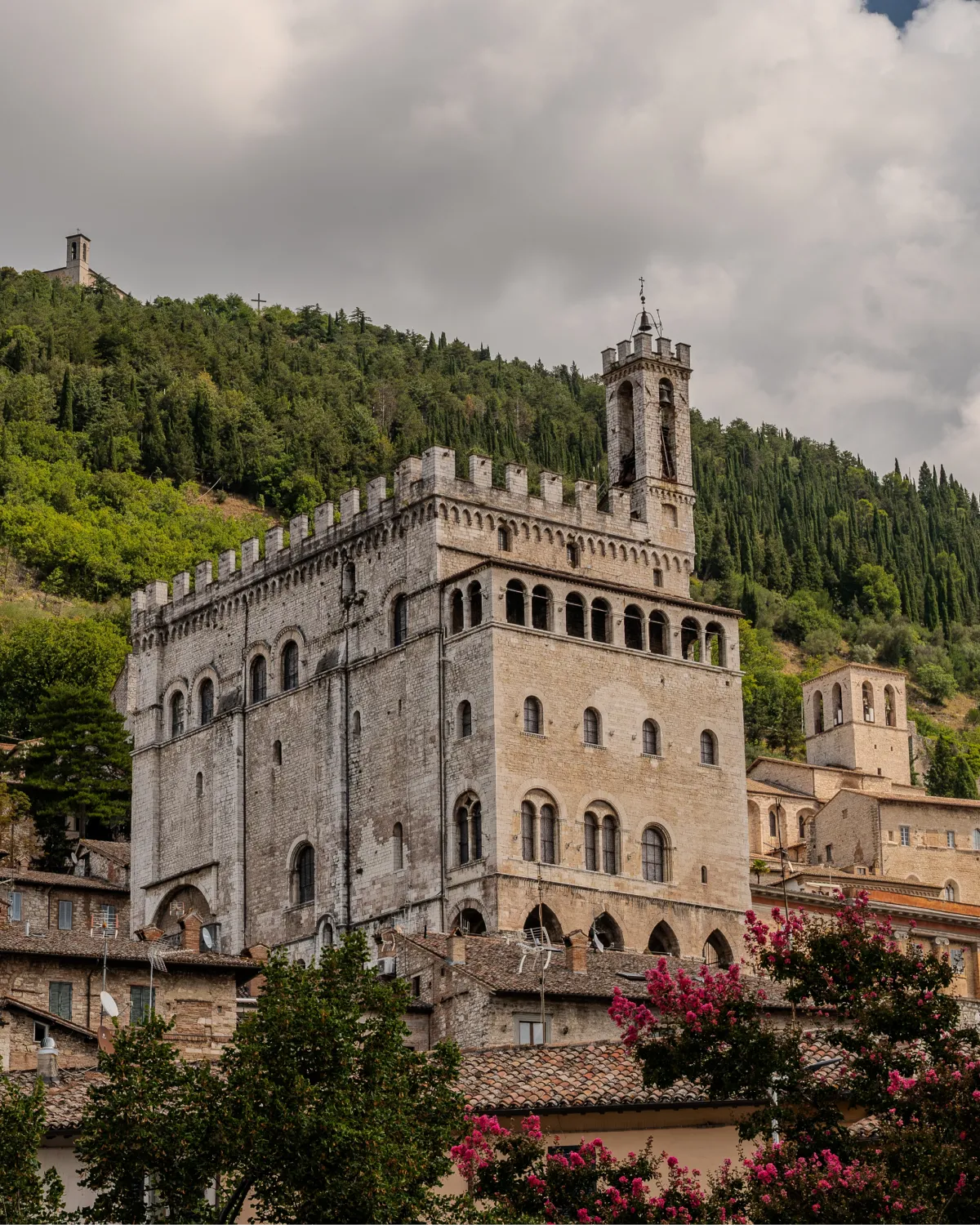
Palazzo dei Consoli is a symbol of Gubbio and dominates Piazza Grande with its majestic medieval presence. Inside it, you’ll find the Civic Museum, where the famous Eugubine Tablets are kept. These are among the most important documents of ancient Italy.
The itinerary reveals historical rooms, furnishings and collections that tell the city’s story from the Umbrian period to the Middle Ages. It’s one of those places that profoundly captures the essence of Gubbio’s identity.
Piazza Grande
+39 075 9274298
Church of San Francesco della Pace
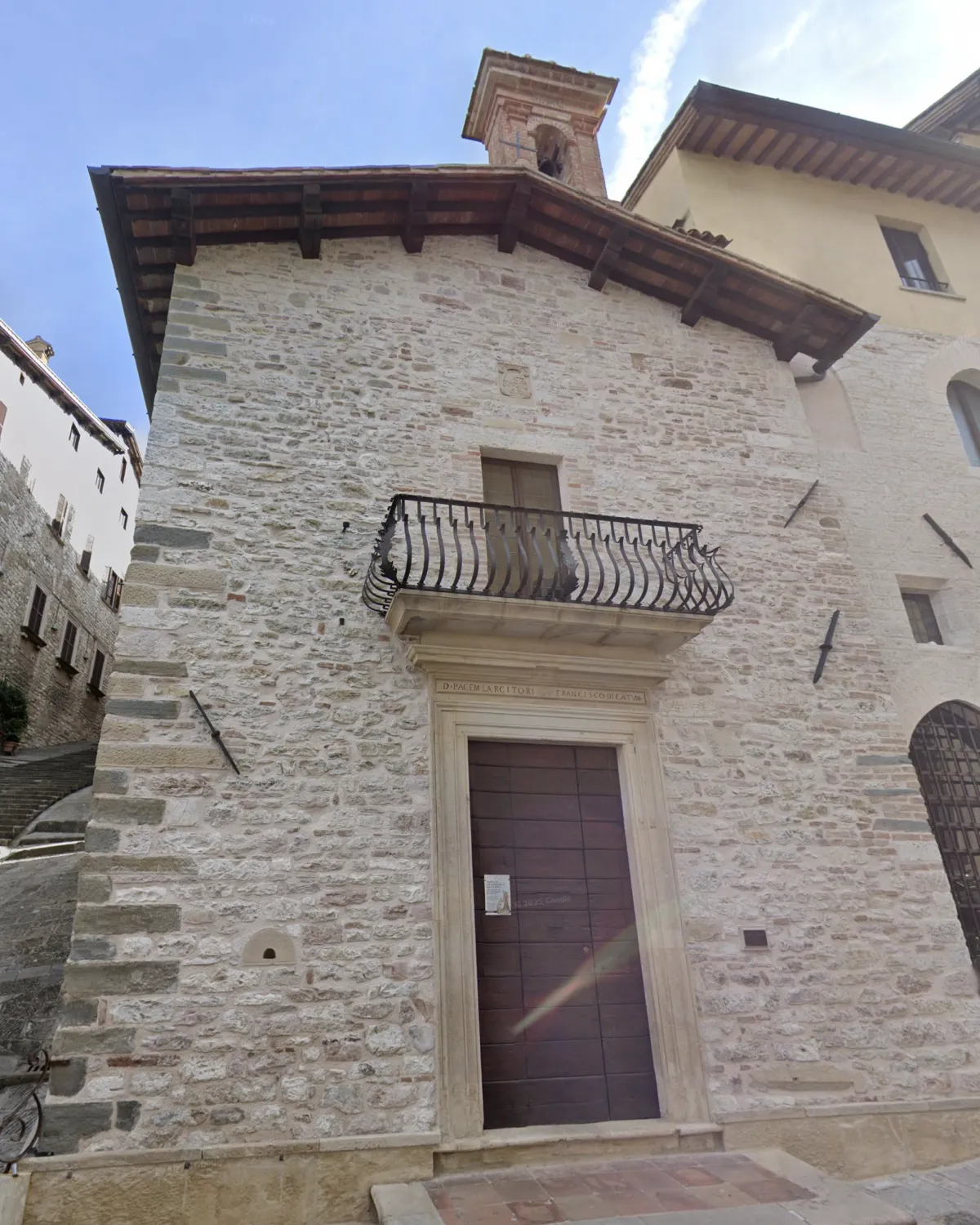
You’re not simply entering a church – you’re stepping into a place that’s deeply connected to Gubbio’s traditions and to the Festival of the Ceri. In fact, it’s here that the Captains of the Festival are elected and where the statues of Saints Ubald, George and Anthony are preserved. These are the figures placed on top of the Ceri during the celebration.
The church stands above the grotta della lupa, the cave where Saint Francis tamed a wolf. The ancient stone linked to this story is kept inside its crypt.
Via Savelli della Porta
+39 075 9274298
Ducal Palace Museum
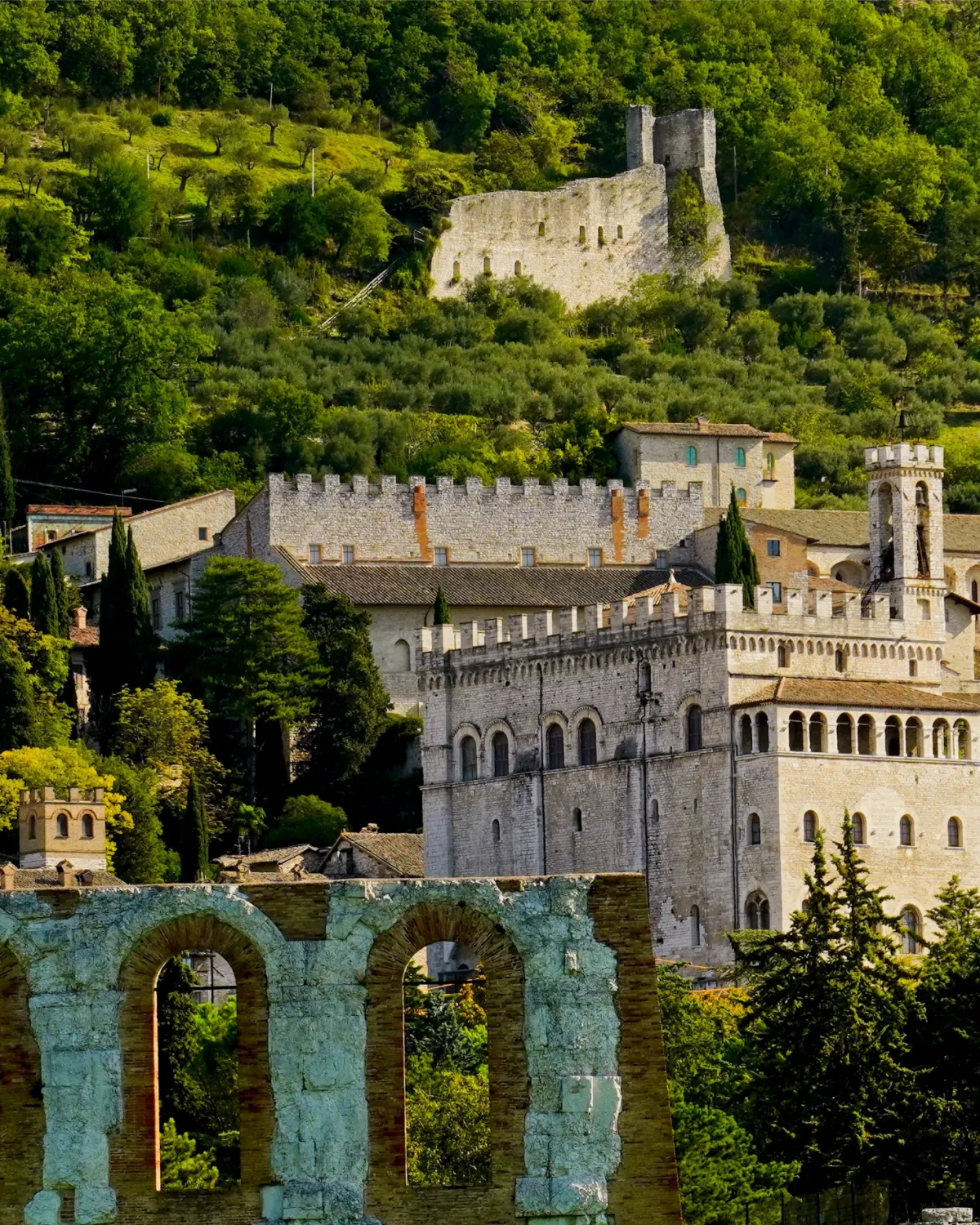
Overlooking Piazza Grande, the Ducal Palace was built in the 15th century at the behest of the great Federico da Montefeltro.
You can visit the rooms which still contain some of the original furnishings and works of art that tell the story of the evolution of painting in Gubbio between the 13th and 18th centuries. On the ground floor, you can see the medieval ruins beneath the courtyard, while upstairs you’ll find a section dedicated to contemporary art, featuring works from the Gubbio Biennale.
Via Federico da Montefeltro
+39 075 9275872
Diocesan Museum
Located between the Cathedral and the Ducal Palace, the Diocesan Museum can be found inside the 13th-century Palazzo del Capitolo dei Canonici.
During your visit, you’ll travel back through centuries of history, discovering Roman and medieval artefacts, 14th and 15th-century paintings by local artists and liturgical objects. Then there’s a detail you might not expect: the impressive 15th-century Canons’ Wine Barrel, capable of holding up to 20,000 litres of wine.
Via Federico da Montefeltro
+39 075 9220904
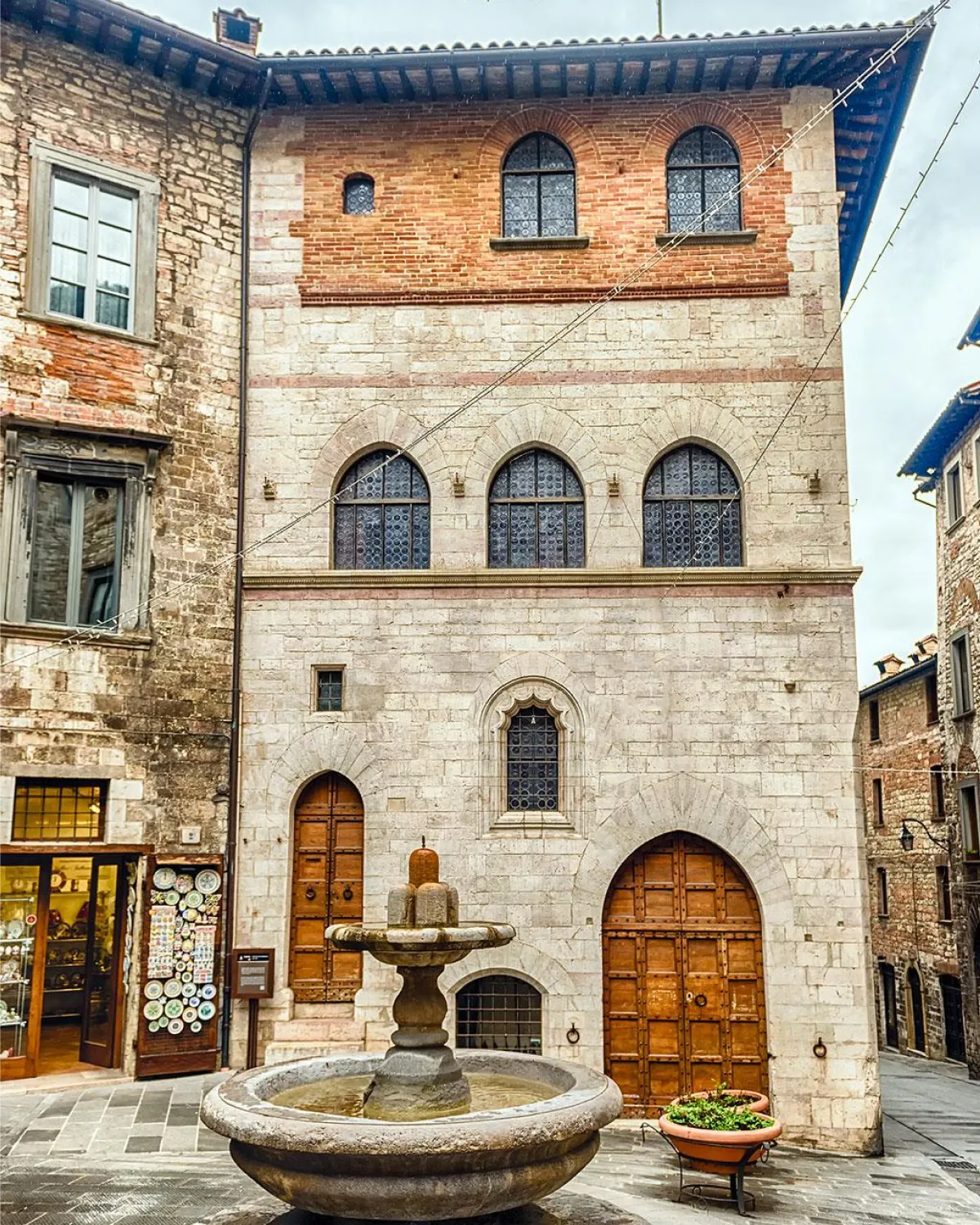
Palazzo del Bargello
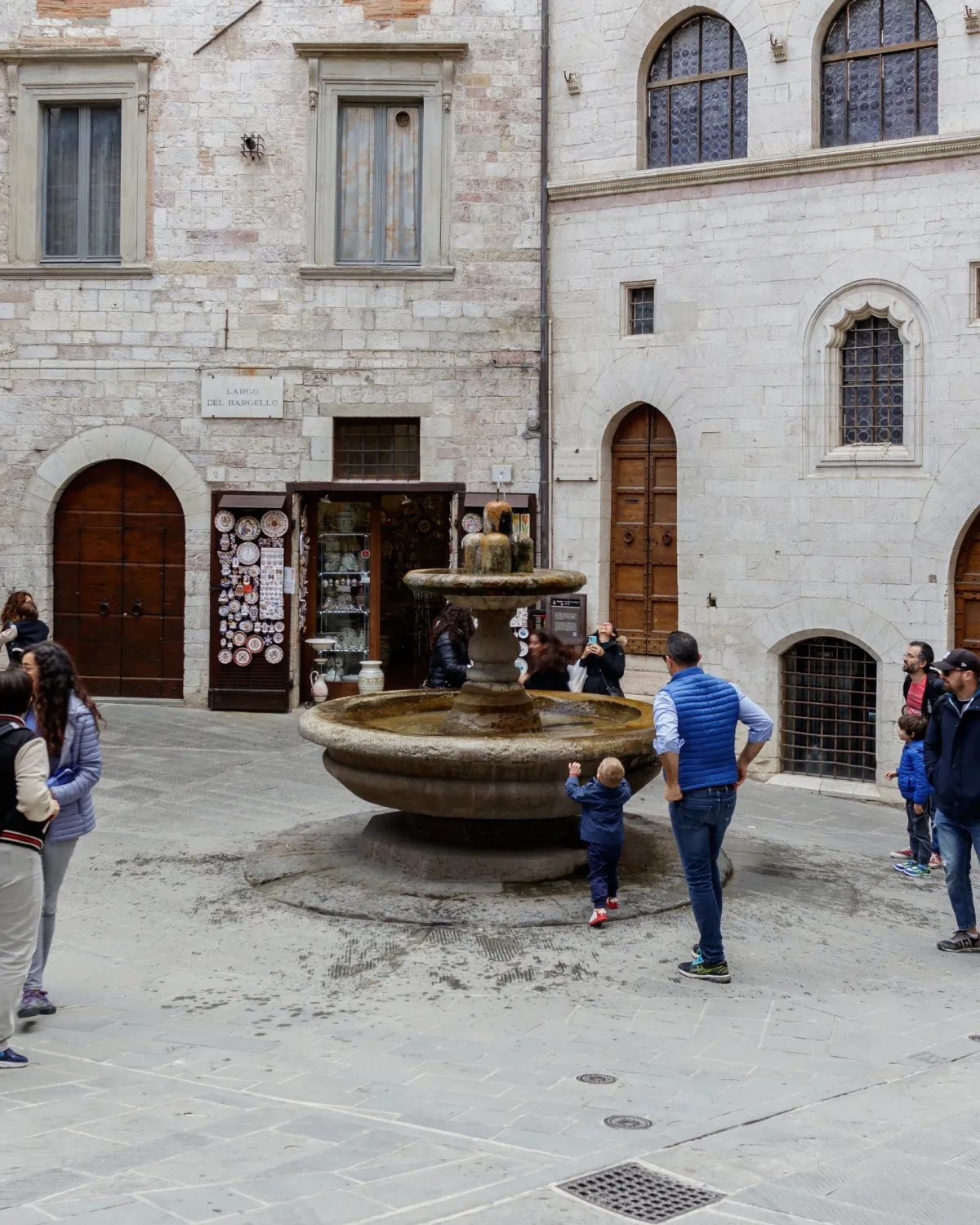
In the historic centre of the town, along Via dei Consoli, stands Palazzo del Bargello one of Gubbio’s best-preserved examples of Gothic architecture. Dating back to the 1300s, it was once the headquarters of the Bargello, the town’s chief of police.
Today, it hosts the Crossbow Exhibition, with historic weapons and costumes from the famous Palio della Balestra (Crossbow Contest) that fills the city with life every year. It’s a place that perfectly captures the true spirit and traditions of Gubbio.
Largo del Bargello
+39 075 9220904
MUAM - Museum of Arts and Trades
Inside the noble 15th-century palace, the MUAM museum tells the story of Gubbio’s traditions through 3 exhibition levels, 20 sections and more than 2,150 objects.
Here, arts and trades are not simply something to observe: they become a real experience, thanks to the direct involvement of local artisans and artists, who keep these traditions alive through their work. An active space with a great cultural value!
Via Cavour
+39 393 057 4248
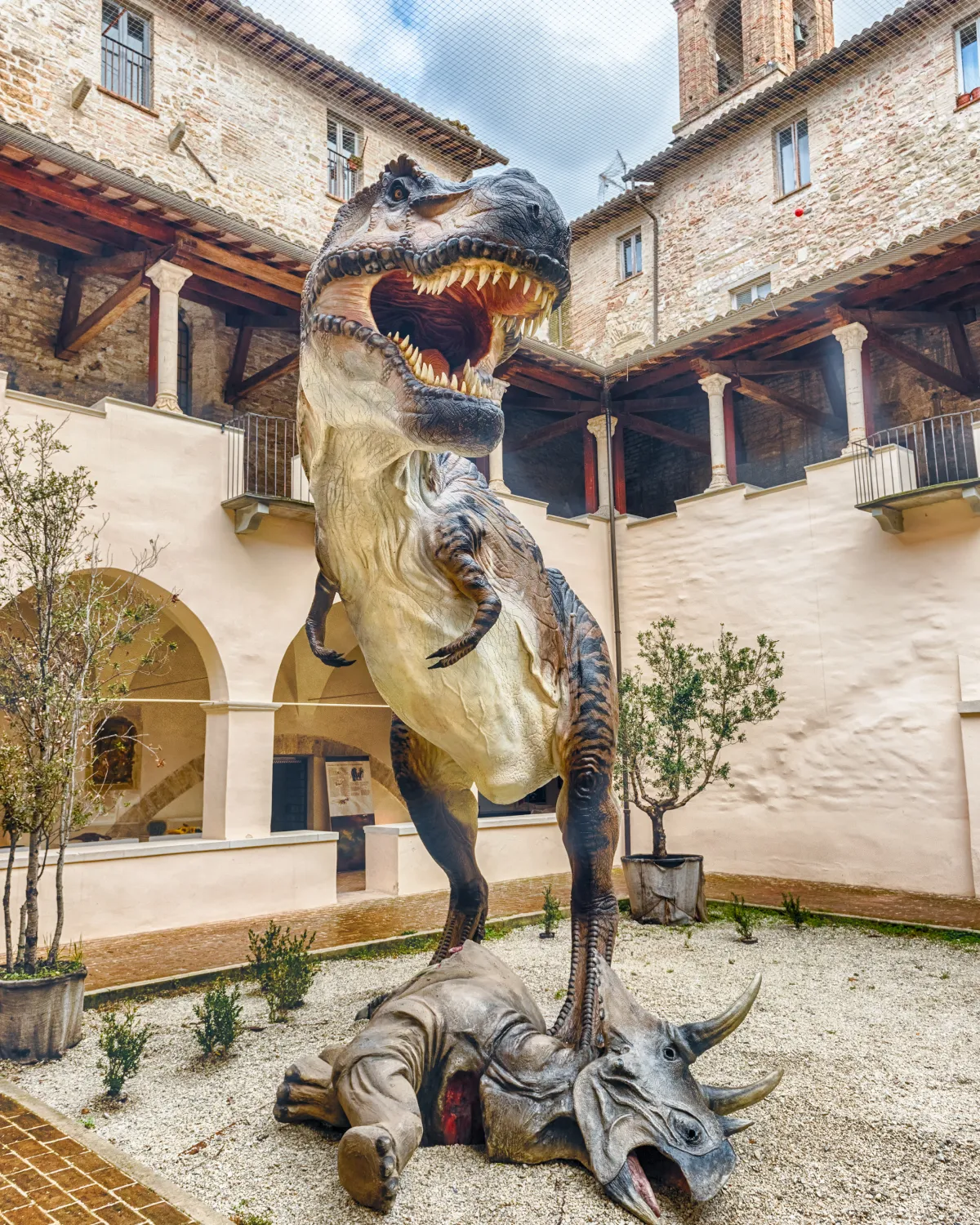
Extinction - Dinosaurs in the flesh
At Extinction, time is measured in millions of years. The exhibition tells the story of the great extinctions starting right here in Gubbio, with the Bottaccione Gorge, a key location for studying the disappearance of the dinosaurs.
Featuring life-size models, fossils and multimedia installations, the itinerary takes you from Prehistory to the present day, combining science and pop culture.
Via Monte Ingino, 5
+39 075 927 3872
Basilica of Sant’Ubaldo
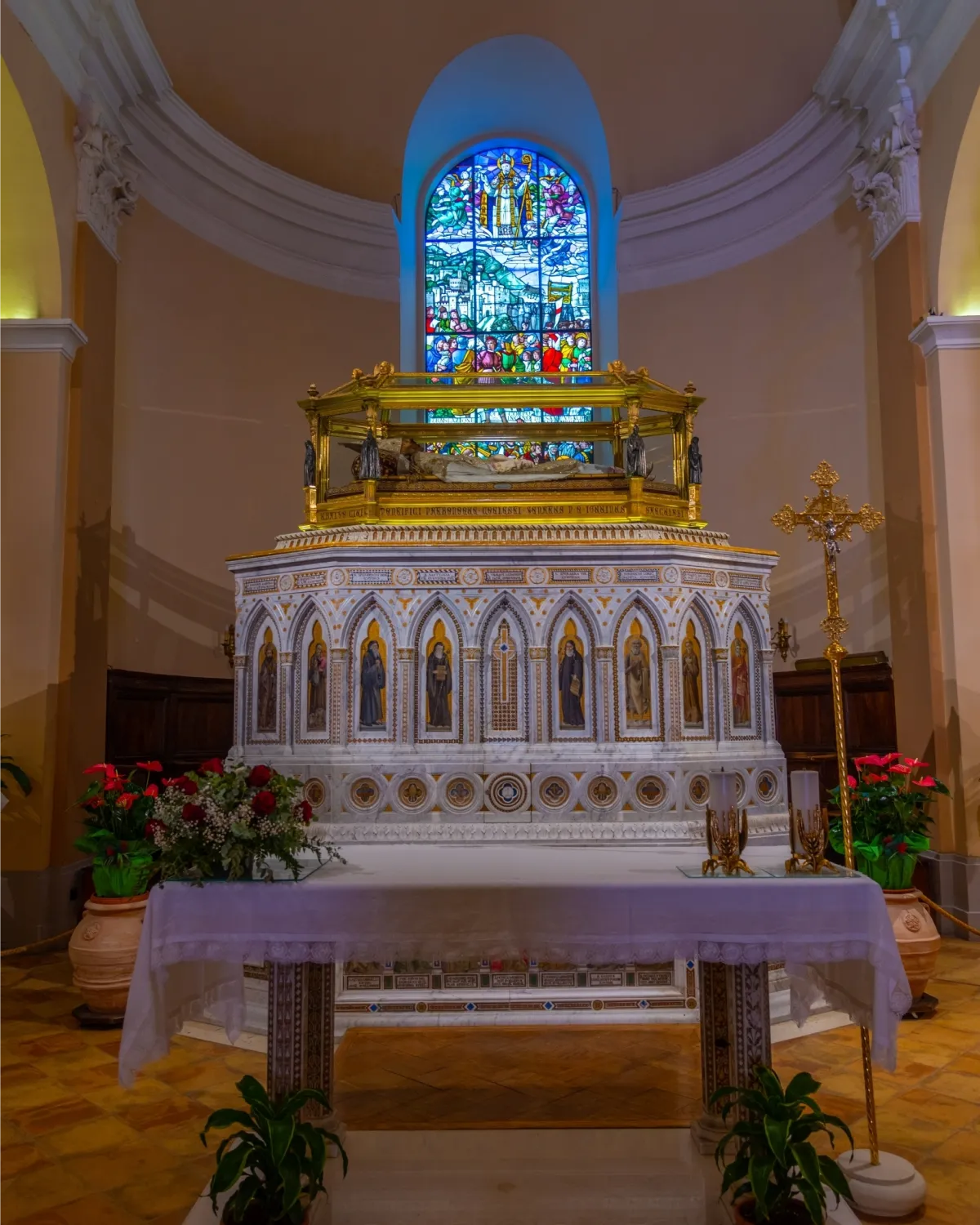
The Basilica of Sant’Ubaldo, patron saint of Gubbio, stands on Monte Ingino and was built in the 16th century to contain his incorrupt body. It’s one of the most important places for the city and for the people of Gubbio and also plays a starring role in the famous Festival of the Ceri which brings the whole community together every year.
If you love walking, you can get to the basilica along a path that starts in the centre di Gubbio.
Via Monte Ingino, 5
+39 075 927 3872
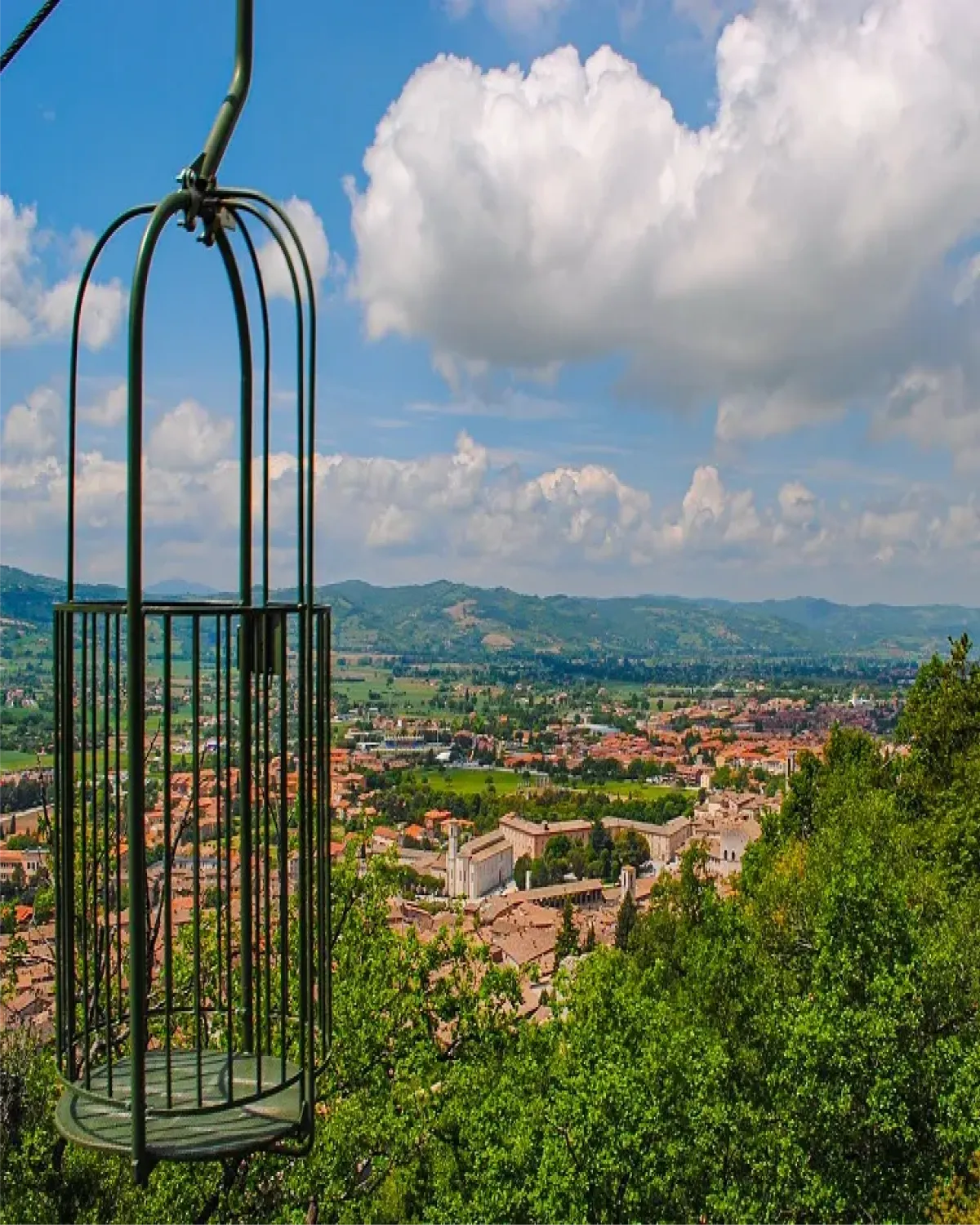
The journey starts at a height of 522 metres in the city of Gubbio and reaches 900 metres at the summit. You can walk up along the “stradoni” paths, passing chapels and panoramic viewpoints, or you can opt for the cable car, which is more direct and has an uninterrupted view of the city.
At the top, you’ll find the Basilica of Sant’Ubaldo and, slightly higher up, the remains of the Rocca. All around, there are picnic areas, cafés, restaurants and the Parco del Coppo, an ideal setting for an outdoor break.
For info: CAI Gubbio
Exploring Evo Hotel
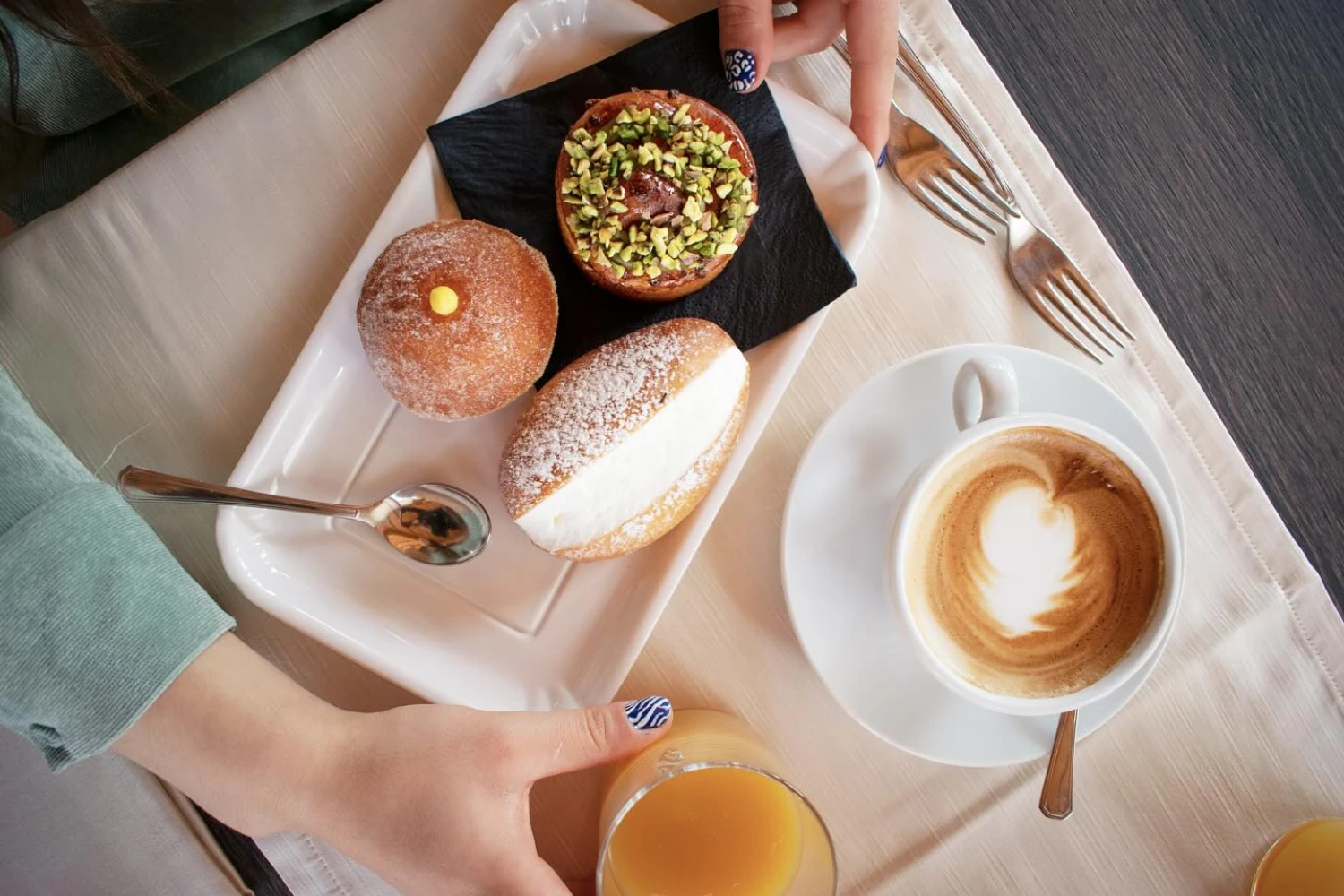
Breakfast & MAD Bar
Simplicity, quality, fast service and real locally-grown products.
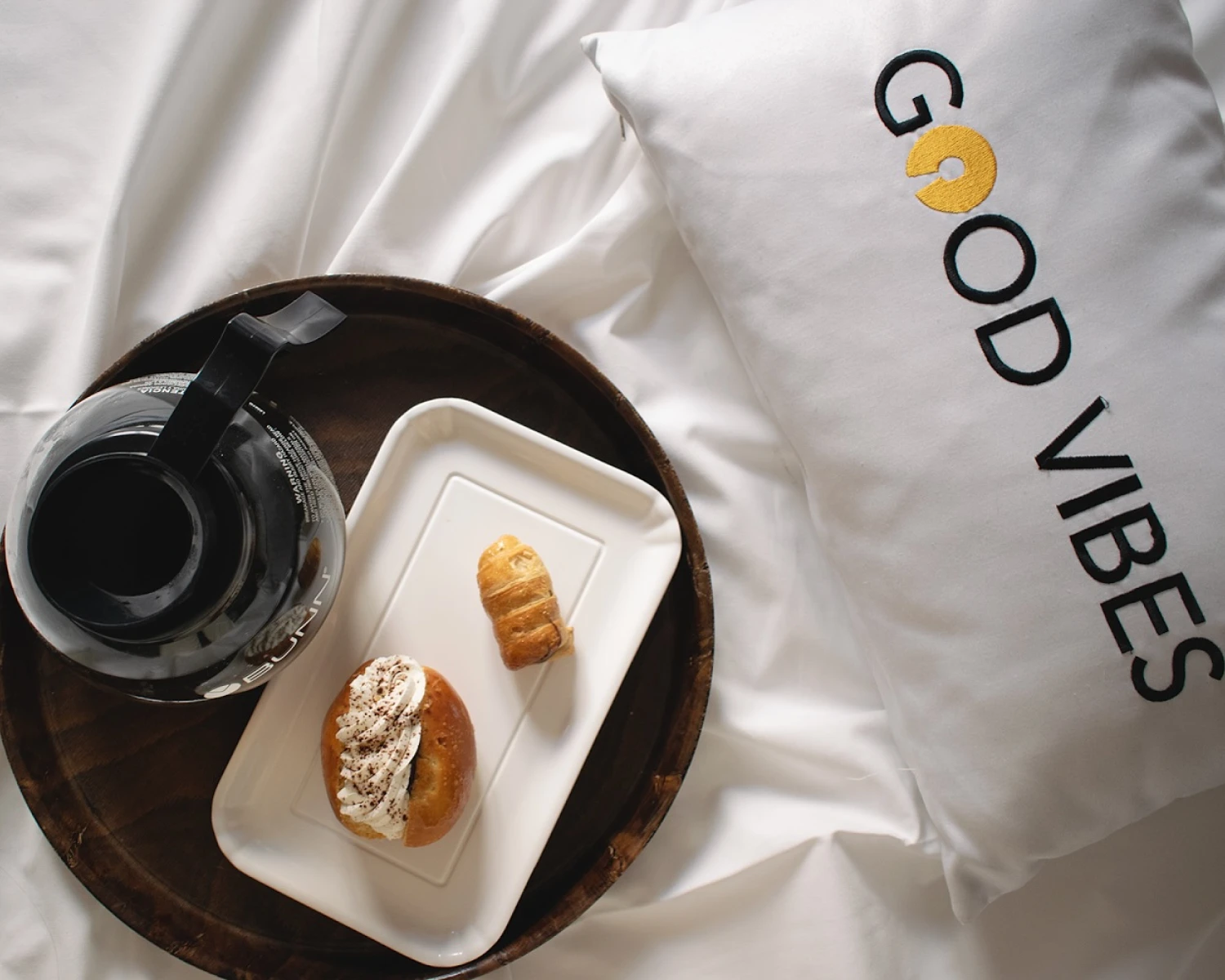
Mad Hotel
Let us tell you a bit about ourselves and about Evo Hotel. Only interesting facts, we promise!
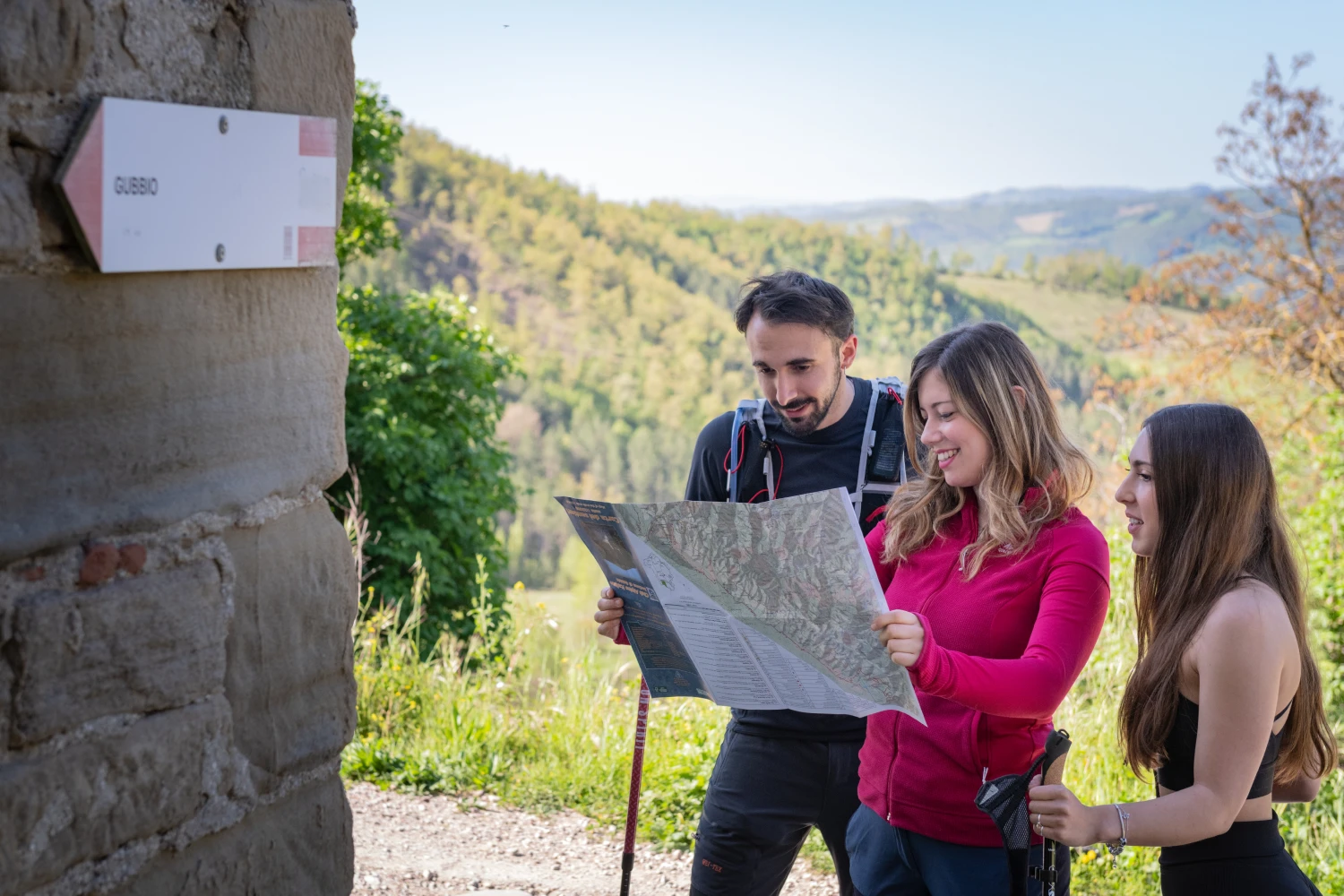
Authentic experiences
The best way to explore the real Umbria? With tips from two locals born-and-bred in Gubbio.
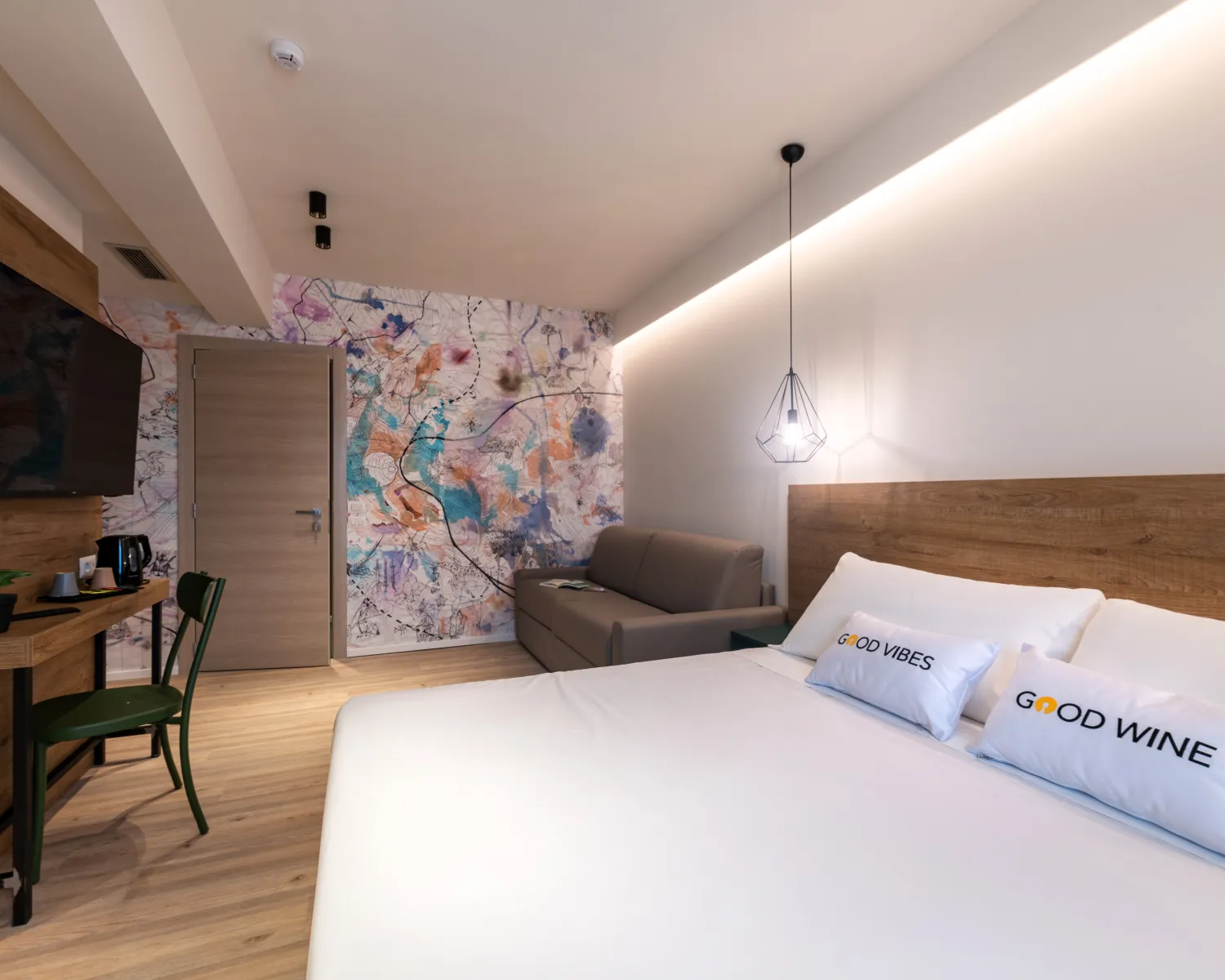
The rooms
Junior Suite, Superior, Superior King, Standard: rooms for every style.
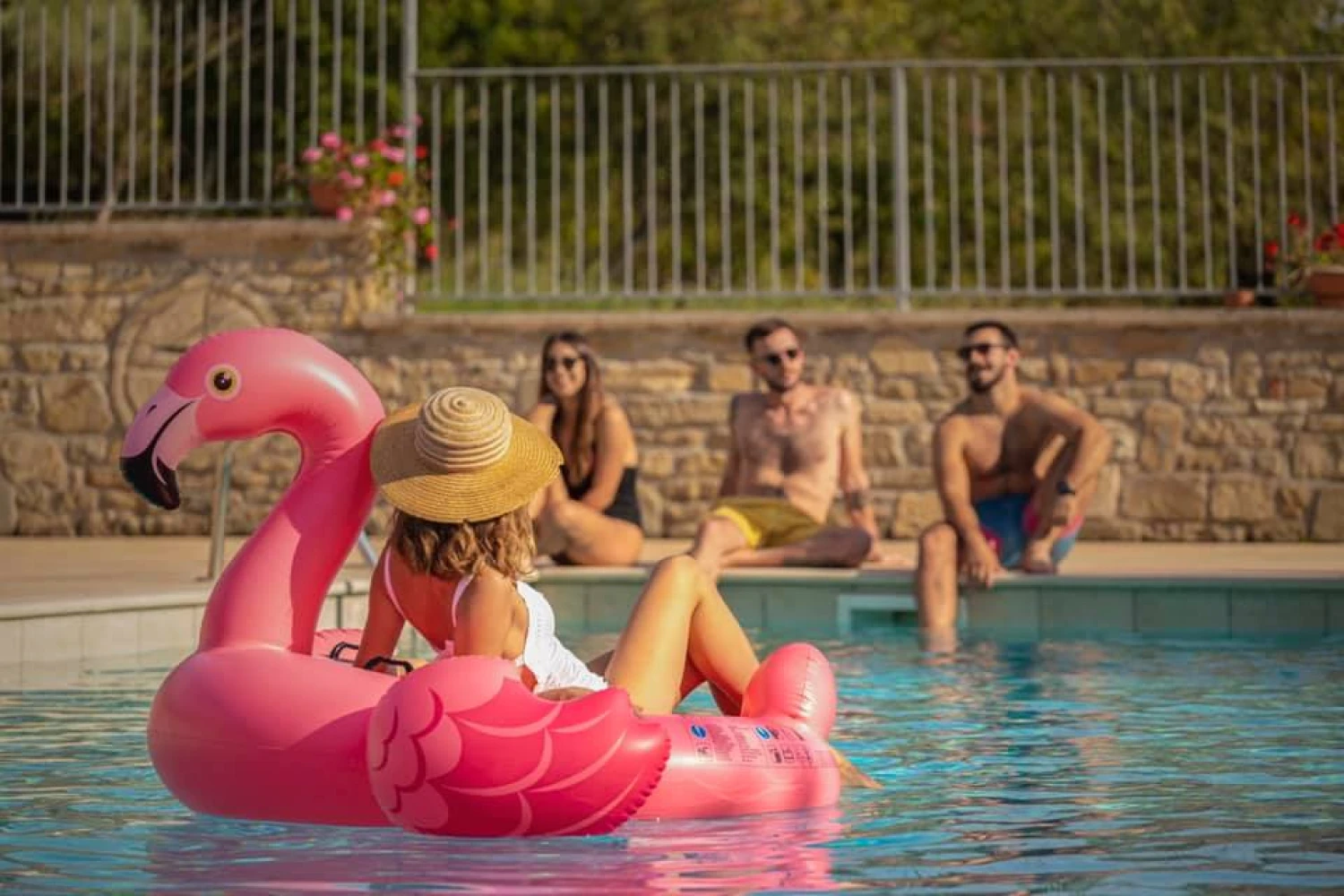
Super Pool e Feel Garden
Relaxation taken to the next level, to enjoy with the freedom of having no plans.

Pet Hotel
Our little dog, Lulù, can’t wait to greet your dog with a warm “woof-come”!
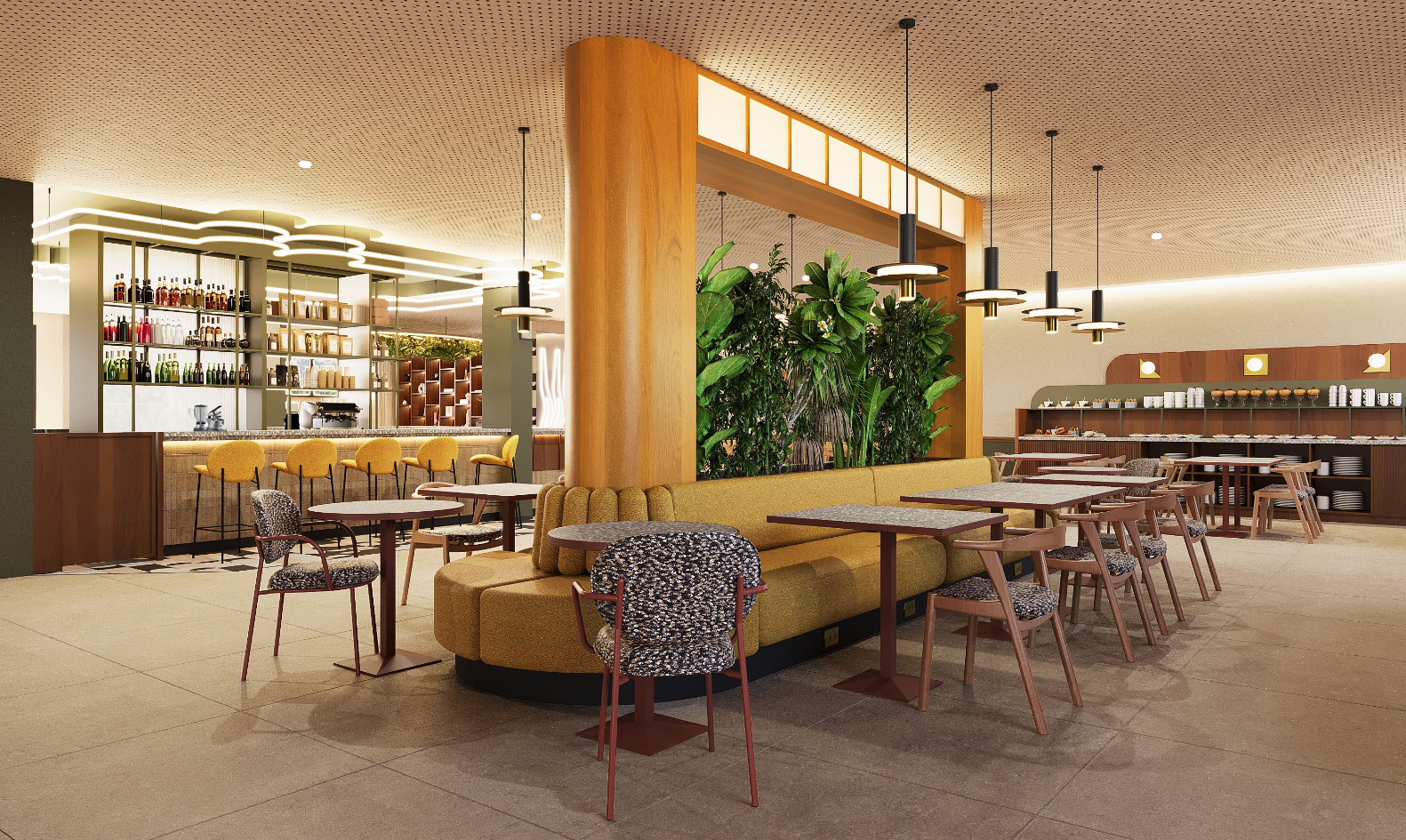
Meeting Area
Flexible and well-equipped, for small, medium and large events.

